How to Choose Yarn for Crochet Animals
Fibre, weight and colour all change how a crochet animal looks and feels. Here is how to pick a yarn that suits your project.
3 min read

The same pattern can look completely different depending on the yarn you choose. Fibre affects the texture and how clearly your stitches show, weight affects the finished size, and colour affects how easy the project is to make.
Fibre: what the yarn is made of
Cotton
Cotton gives crisp, well-defined stitches and a firm fabric that holds its shape. It has very little stretch, so it can feel tougher on the hands, and it does not get fuzzy. It is a popular choice for neat, detailed amigurumi.
Acrylic
Acrylic is affordable, soft, easy to find in a huge range of colours and usually machine washable. Some acrylics are slightly fuzzy, which softens the look of the stitches.
Blends
Cotton and acrylic blends sit in between: softer than pure cotton, with better stitch definition than many acrylics. They are a comfortable all-round option.
Plush and chenille yarns
Velvety yarns make wonderfully cuddly toys, but their texture hides the stitches, which makes counting hard. They are best saved until you are comfortable reading your own work.
Weight: how thick the yarn is
Yarn weight describes thickness. Many labels use the standard weight system, which runs from 0 (lace) to 7 (jumbo). For amigurumi you will most often see:
- Weight 2, fine or sport: small, detailed pieces.
- Weight 3, light or DK: a very common choice for amigurumi.
- Weight 4, medium, worsted or aran: slightly larger toys that work up quickly.
Colour: easier to see, easier to make
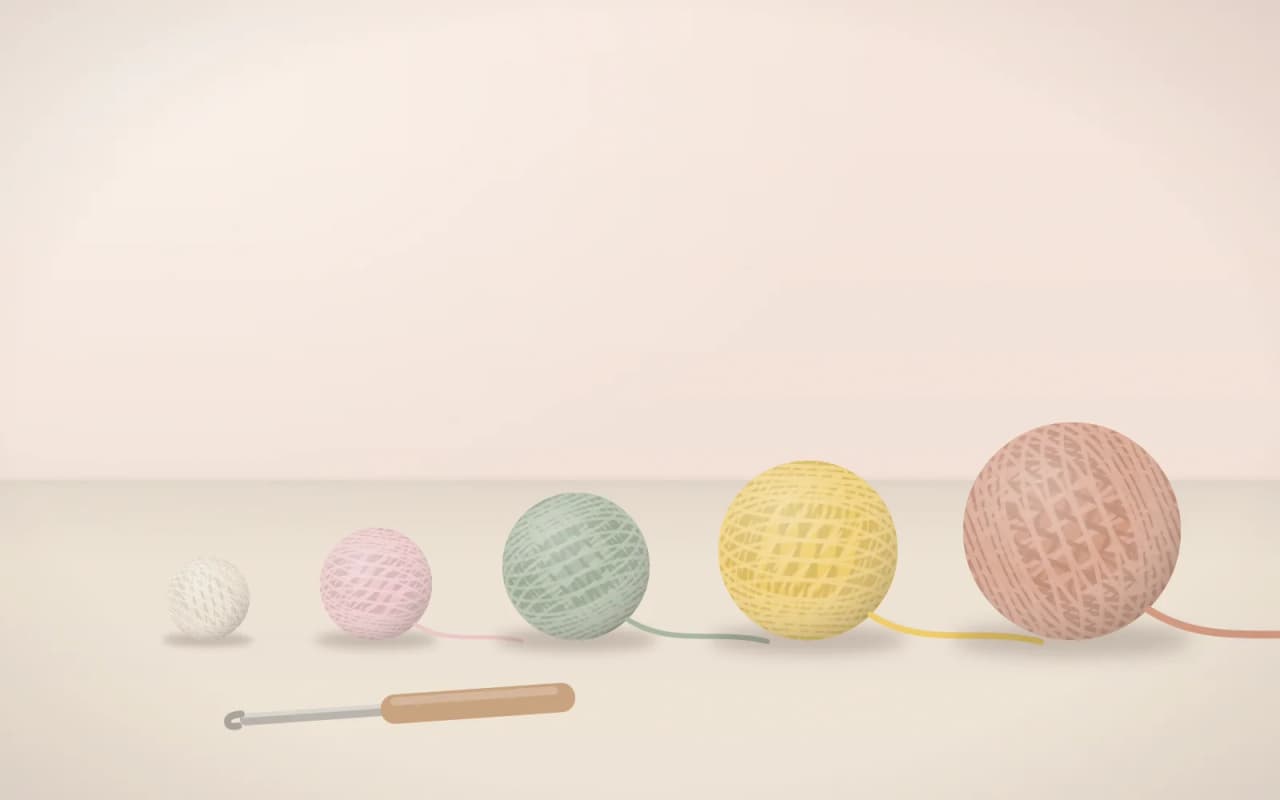
Light, solid colours make it much easier to see where each stitch goes. Very dark yarns and variegated yarns look lovely but hide stitches, so they are better for your second or third project than your first.
If you are swapping colours from a pattern, look at the whole palette together. Placing the balls side by side before you start is a quick way to check they work as a set.
Read the label
A yarn label usually tells you:
- the weight, sometimes as a number in a little yarn-ball symbol
- the fibre content
- a recommended hook or needle size
- the length and weight of the ball
- care instructions
- the colour and the dye lot
Colours can vary slightly between dye lots, so buy enough of the main colour from the same lot for the whole project.
Substituting the yarn in a pattern
When a pattern names a yarn you cannot find, choose another yarn of the same weight and a similar fibre. Make a few rounds and compare your fabric with the pattern's photos or measurements. If your piece comes out much larger or looser, try a smaller hook.
Patterns in this shop list the yarn weight and materials on each product page, so you can check before you buy. The Tiny Honey Bear is a good example to look at.
Patterns from this article
Put what you have read into practice with these patterns.
Shop all patterns


Keep reading
All journal articlesBeginner Guides
Getting Started with Amigurumi Crochet
What amigurumi is, the handful of stitches you need, and how to choose a first project you will actually enjoy finishing.
3 min read
Crochet Tips
Essential Crochet Tools for Beginners
A short, honest list of the tools you need for your first amigurumi, and the extras that can wait until later.
3 min read
Amigurumi Tutorials
Common Amigurumi Mistakes and How to Avoid Them
Gaps in the fabric, lost stitch counts and lopsided ears happen to everyone. Here is how to spot them early and fix them.
3 min read